
Artificial Intelligence in Business: How AI Supports Human Work
Artificial intelligence is often seen as a threat to jobs, but it can actually support humans by handling repetitive tasks and freeing teams to focus on what matters most. Learn how AI works ethically in business and why it doesn’t replace people.
Every time we talk about artificial intelligence, I see comments like:
“The end of human jobs.”
“Stay away from AI.”
And honestly, I get it.
Fear of new technology isn’t new. Humans have been reacting this way for over 200 years.
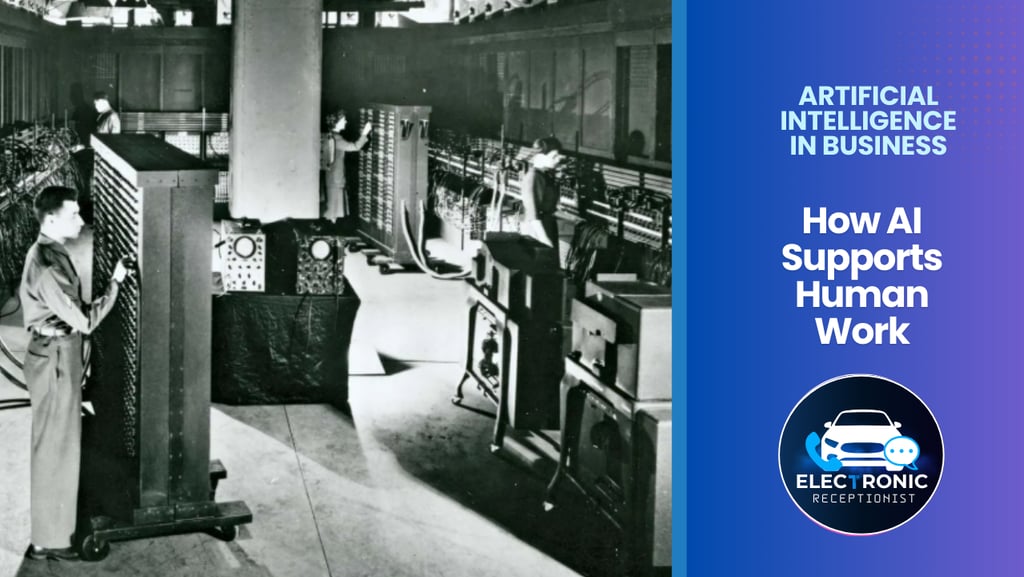
In the early 20th century, office workers worried when punch-card systems and early computers arrived. Clerical staff feared machines would replace them, even though those tools were designed to make work faster and more accurate.
Then came cars.
Then telephones.
Then, personal computers.
Every time, the message was the same:
This will kill jobs. This will ruin society.
And yet… here we are. Still working. Still adapting.
Artificial Intelligence Didn’t Appear Overnight
Artificial intelligence didn’t suddenly appear last year. It has been evolving quietly for over 70 years, first in factories, then in diagnostics, logistics, and now customer service.
What artificial intelligence does best is simple: it removes repetitive, interruptive, and stressful tasks so humans can focus on what we do best — problem-solving, empathy, creativity, and skilled work.
This is the part of the conversation that often gets missed. AI isn’t here to replace humans; it’s here to support them.
Why We Built an Electronic Receptionist
That belief is exactly why we built Electronic Receptionist.
Not to replace people, but to stop missed calls turning into missed jobs.
In many businesses, especially automotive, a missed call isn’t just an inconvenience. It can mean:
a lost service booking
a missed enquiry
a customer who never rings back
By handling calls consistently, artificial intelligence frees human teams to focus on higher-value work, such as marketing, customer care, and client relationships.
The Bigger Question Isn’t “Should We Stop AI?”
The real question isn’t “Should we stop artificial intelligence?”
It’s “How can we use AI ethically and responsibly?”
As artificial intelligence continues to take on routine tasks, human roles will change, not disappear. Someone who once spent all day answering phones can now focus on work that requires creativity, empathy, and judgment.
At a societal level, conversations are already happening about how to share the productivity AI creates, through retraining programs, new job paths, or safety nets like Universal Basic Income. The goal is not to halt progress, but to make sure its benefits are shared fairly.
AI Doesn’t Replace Humans, It Frees Them
Artificial intelligence doesn’t have to replace people. Used thoughtfully, it frees us to focus on work we’re best at while helping businesses operate more efficiently and serve customers better.
That’s the future we’re building toward, one where humans and AI work together, not against each other.
If you’re curious how AI can support your business without losing the human touch, we’re always happy to have that conversation.
Discover how Electronic Receptionist uses artificial intelligence to manage calls, reduce missed opportunities, and free your team for the work that truly matters.
You might also like:
AI for Good: How the Best AI Is Helping Garages Grow, Not Replace Them
👉Back To AI Automotive Learning Hub
© 2025 Electronic Receptionist – All rights reserved.
Automotive Answering & Booking System for UK Garages.
UK Built | Built for Garages & The Automotive Industry | 24/7 Call Handling | Miss Fewer Bookings | Free Trial Available